In July, the air in Rome stands completely still, and the cobblestones soak up heat until late evening. Anyone walking through the city at noon quickly learns two things: to chase the shadows cast by the buildings and to listen for the sound of running water. Let's skip the massive, monumental fountains where tourists crowd around with selfie sticks. Instead, let's talk about the small neighborhood fountains that Romans have used for generations to fill their bottles and splash their wrists. This public water network provides fresh water to everyone, a service dating back to the late nineteenth century that remains a lifesaver during the hottest months.
The map of the nasoni and the July thirst
Your first line of defense against the July heat is a dark cast-iron column just over a meter tall. It is called a nasone (big nose) because of the curved metal pipe that pours out a constant stream of cold water. The water temperature is always excellent because it comes directly from the Apennine springs through underground pipes. There are nearly two thousand of them in Rome, and finding one is usually just a matter of walking a few steps. The first nasone was installed in 1874 by order of Mayor Luigi Pianciani, designed with three dragon-shaped spouts. You can still find a few of these older models, for example in Piazza della Rotonda right in front of the Pantheon.
Many tourists make the mistake of buying warm plastic water bottles from unlicensed street vendors near the Colosseum. Instead, you only need to walk fifty meters to find a free fountain. To drink without getting your face wet, just block the main nozzle with your finger: the water will squirt out of a small hole on top, creating a perfect stream for drinking. If you want to plan a walk without running dry, you can check out some recommended itineraries through Roman streets, which are useful for mapping out rest stops before the sun gets too intense.
The neighborhood fountains of Pietro Lombardi
In the 1920s, the city government decided that the cast-iron nasoni, while practical, were too plain for the historic center's monumental areas. They commissioned an architect, Pietro Lombardi, to design a series of artistic travertine fountains that recalled the history or traditional trades of each neighborhood.
My favorite is on Via degli Staderari, just a short walk from Piazza Navona. It is called the Fontana dei Libri (Fountain of the Books) and is built directly into the wall. It shows a deer head, the symbol of the Sant'Eustachio district, surrounded by four ancient books resting on stone shelves. Four small streams of water flow from the books into semi-circular basins. I always stop here when I am in the area for work. The water is incredibly cold, and there is never a crowd like you find at the larger fountains.
Not far away, near Piazza Venezia, is the Fontana della Pigna in the small Piazza San Marco. This fountain is shaped like a stylized pinecone resting on crowns of leaves, with water dripping down into two basins at ground level. If you want to learn more about these urban installations, you can read the history of the Pigna district and its symbols to understand how these minor works of art were created to serve passersby.
There are nine of these fountains in total, and each one tells the story of its neighborhood, like the fruit basket fountain in Trastevere or the rudders in Ripa. For those who want to take a themed walk without getting lost in the usual tourist traps, it is worth following a guide to the districts and fountains to discover details that most distracted visitors miss.
The free cool of Renaissance courtyards
When the thermometer climbs past thirty-five degrees, the stone of Renaissance palaces offers unexpected shelter. Many of these buildings have massive inner courtyards that act as natural cooling chambers. The air inside is often three or four degrees cooler than on the street.
A great example is the courtyard of Palazzo Mattei di Giove, located at the corner of Via dei Funari and Via Caetani. The main gate is often open during the day. Stepping inside, you will find yourself in a square space where the walls are decorated with Roman busts and stone sarcophagi set into the masonry. It is a quiet courtyard, almost entirely free of tourists, where traffic noise completely fades away. You can sit on the stone steps in the shade for ten minutes to read or plan the rest of your day. There is no admission fee; just enter quietly and respectfully, as the palace houses offices and historical research institutes. Another remarkable, free courtyard is at Palazzo Altemps, near Piazza Navona, where the Renaissance loggia offers a constant patch of shade even during the hottest hours of the day.
Avoiding the lines on the Aventine Hill
Another open secret, which is not really a secret anymore, is the famous keyhole of the Knights of Malta Priory gate at the top of the Aventine Hill. Everyone knows that looking through it reveals St. Peter's dome perfectly framed by manicured trees.
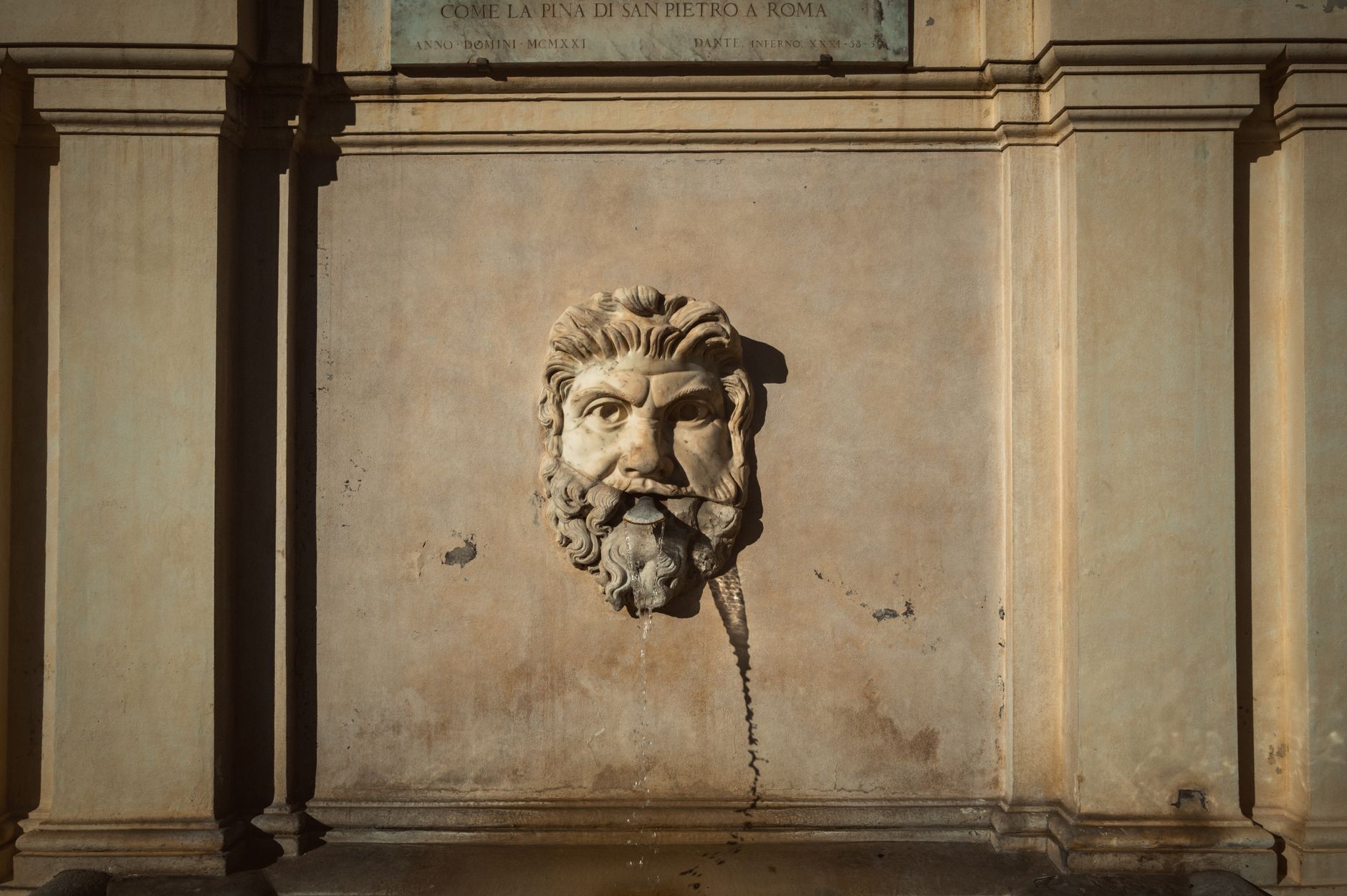
The practical reality of July is that to look through that keyhole, you will have to stand in a motionless line under the baking sun in Piazza dei Cavalieri di Malta, often without a shred of shade. My advice is to skip the keyhole line entirely and head into the nearby Giardino degli Aranci (Orange Garden) instead. The view of the dome and the rooftops is just as clear. If you go around eight in the evening, as the sun begins to set and the air becomes more breathable, you will catch a light breeze coming up from the Tiber. It is the best time to enjoy the city from above without the stress of tour groups moving around in buses. Plus, right at the entrance of the garden, you will find another historic fountain, the Fontana del Mascherone, which is perfect for filling your water bottle before sitting down to watch the sunset.