Rome is hot in June. Anyone who tells you otherwise has never walked on the asphalt of via dei Fori Imperiali at two in the afternoon, when the air shimmers and it feels like breathing sand. During these summer days, the trick to surviving and enjoying the city is to change your pace. Forget about rushing under the sun to see yet another ruin. Instead, look for shade, quiet, and the neighborhoods where Romans actually live, or where the architecture takes unexpected turns.
The stone eccentricity of the Coppedè district
Starting from Piazza Buenos Aires, you are just a short walk from an unusual architectural experiment. You won't find Roman ruins or grand Baroque churches here. Instead, you will find a group of buildings designed by the architect Gino Coppedè between 1915 and 1927. It is not a huge area, just about forty structures arranged around Piazza Mincio, but the effect is that of a bizarre visual hallucination.
The main entrance is under a large arch connecting two buildings, from which hangs a wrought-iron chandelier that looks like it belongs in a medieval castle. As soon as you pass under the arch, the first thing you notice is the Fontana delle Rane in the center of the square. It is famous because in 1965, the Beatles jumped into it fully clothed after a concert at the nearby Piper Club on via Tagliamento.
This place has a singular reputation. Many associate it with stories of occultism and mystery. If you are interested in this darker side, you can follow this itinerario insolito tra storie e leggende, which looks at the asymmetrical facades of these houses. The buildings are decorated with turrets, medieval friezes, dragons, heraldic shields, and a large spider on the facade of the Palazzina del Ragno. It is a mix of styles, from Gothic to Baroque and Art Nouveau, which the architect threw together without holding back.
If you visit in summer, especially in June, you might find outdoor concerts or special guided tours. During this period, the eventi estivi per il centenario del quartiere take place, offering a chance to listen to classical music among these eccentric facades as the sun goes down and the stone cools off. To plan your walk, I recommend a percorso che parte da Piazza Buenos Aires that leads into the quiet streets of the Trieste neighborhood. Avoid the middle of the day, not because of crowds (this place is always quite peaceful compared to the historic center), but because the overhead sun flattens the depth of the stone carvings. The best time is late afternoon, around six, when the light hits at an angle.
Garbatella and the working-class housing blocks of the 1920s
On the other side of the city, you can reach the historic Garbatella neighborhood to discover a completely different urban experiment from the same era. While the Quartiere Coppedè was designed for the Roman upper-middle class, Garbatella was built as a working-class district for laborers of the nearby river port on the Tiber, which was ultimately never constructed.
Here, the architecture is inspired by the English garden city model. The buildings are not large apartment blocks, but low-rise villas, called lotti, surrounded by inner courtyards, vegetable gardens, and shared green spaces. Walking through Garbatella in June means smelling freshly washed laundry hanging out to dry, hearing the clatter of dishes from open windows, and listening to residents chatting on benches in the shade of the courtyards.
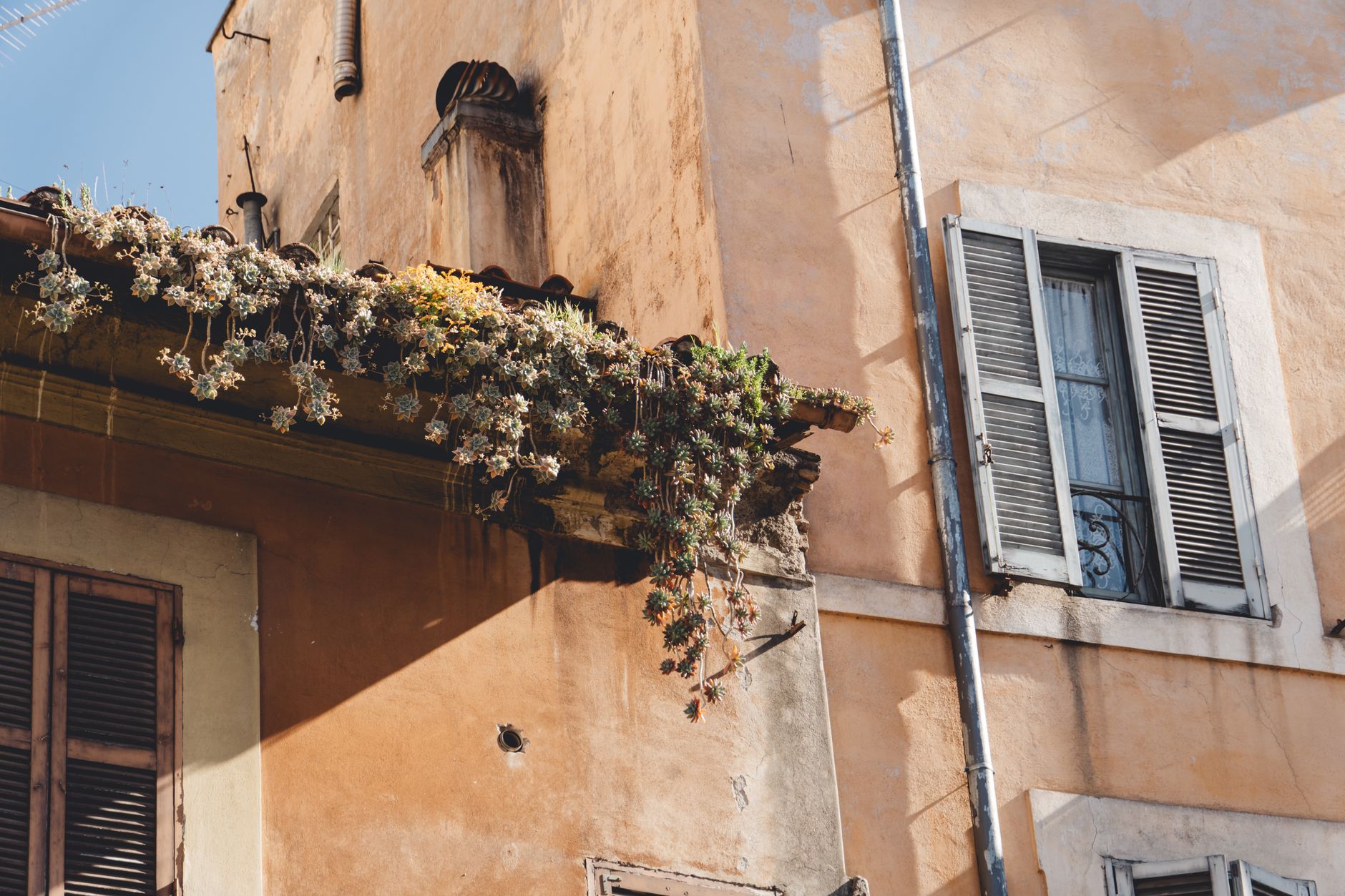
The landmarks to look for on foot are Piazza Benedetto Brin, where the first stone of the neighborhood was laid in 1920, and historic housing blocks like Lotto 24, with its external staircases and inner gardens that feel like the narrow alleys of a provincial village. Do not look for grand monuments. The beauty here lies in the human scale of the buildings, the time-worn ochre walls, and the wild caper plants growing between the bricks.
For lunch or dinner, avoid the overly touristy spots on the main street. Instead, look for the historic trattorias tucked inside the courtyards, where they serve simple, no-nonsense dishes like cacio e pepe or amatriciana. Prices are fair and in line with the traditional trattorias of the area. If you have questions about transport or regulations for getting around these neighborhoods, you can check the official information on the portale del Comune di Roma.
Testaccio and the industrial appeal of the working class
A short distance from Garbatella, separated only by the railway line and a twenty-minute walk, lies Testaccio. This is the quintessential working-class neighborhood, which grew around the old municipal slaughterhouse decommissioned in the late 1970s.
The most unusual feature of the neighborhood is Monte dei Cocci, an artificial hill about thirty-five meters high made entirely of millions of fragments of Roman amphorae. These jars were used to transport olive oil arriving at the river port on the Tiber. Once emptied, they were broken and systematically piled up. Today, you can still admire the hill by walking along via di Monte Testaccio.
At the foot of the hill, the old caves carved into the tufa rock and pottery fragments have over time become workshops, pubs, and restaurants. Testaccio is where modern Roman cuisine was born, the kind based on offal. If you want to try authentic trippa alla romana, pajata, or coda alla vaccinara, this is the place to be.
A good starting point for exploring the area is the Mercato di Testaccio, located on via Aldo Manuzio. For updated opening hours, we recommend checking the portale del Comune di Roma. Here, you can find historic fruit and vegetable stalls alongside modern food stalls preparing high-quality street food, like sandwiches with simmered beef or boiled meat croquettes. It is a perfect stop for a quick, inexpensive lunch before the afternoon heat makes you want to head back indoors.