Rome in May tricks you. You wake up to clear skies, cool air blowing through the hotel window, and you think you can walk non-stop until sunset. Then noon hits, the sun starts beating down on the cobblestones, and you find yourself desperately looking for shade and a drinking fountain. For this reason, when temperatures rise, it makes sense to avoid the scorching intersections of the historic center and head south.
Reach the area using public transport; check the ATAC website for exact routes. From here you can build a full-day itinerary combining two neighboring neighborhoods with opposite characters: Testaccio and the Aventine Hill. The first is working-class, loud, and full of food. The second is a quiet residential hill, dominated by embassies, ancient churches, and tree-lined parks. They work perfectly together, provided you tackle them in the right order.
Morning in Testaccio among the market and local shops
Start your day in Testaccio around ten in the morning. The neighborhood grew around the former slaughterhouse and keeps a very strong food focus. Head straight to the covered local market, with entrances on Via Aldo Manuzio and Via Beniamino Franklin. Skip the clothing stalls or the ones selling generic souvenirs and focus on the perimeter dedicated to gastronomy.
Here you can sort out lunch for a few euros. Stop at one of the historic stalls to taste local specialties, like a slice of pizza bianca with mortadella or a traditional sandwich. Grab something to go, you will need it to eat outdoors later. Leaving the market, take a walk through the surrounding streets to observe the local bakeries and butcher shops. If you want to get an idea of how people lived around here and how the districts evolved, you can read the summary on historic Roman neighborhoods from the official tourism portal.
The climb up the Aventine Hill
From Via Marmorata, the large artery that closes off Testaccio, take Via di Santa Sabina or the Clivo dei Publicii. Get ready for a short but steep climb. As soon as you crest the hill, the traffic noise almost completely disappears. The Aventine is a placid neighborhood, protected by high walls and rows of umbrella pines. Walking along the main street, you come across a series of stops that justify the detour.
- Orange Garden: You will find it on maps as Parco Savello. In May it is at its best, with loaded trees and a lot of scent in the air. Go straight to the terrace at the back: from up there you can see the orange roofs, the Tiber river, and the dome of St. Peter's on the right. It is the right place to pull out the pizza bianca you got at the market.
- Basilica of Santa Sabina: It is located exactly next to the garden. It is a 5th-century early Christian church, very different from the baroque basilicas in the center. The naves are bare, light enters through selenite windows, and the ceiling is made of wood. Check the church's official website for current opening hours. Notice the original wooden portal at the entrance, carved with biblical scenes.
- Piazza dei Cavalieri di Malta: Continuing to the end of the street, you arrive in a square designed by Piranesi. Here you find the famous priory keyhole. You will definitely find a line on the sidewalk. Get in the queue, wait your turn, look at the dome framed by the hedges, and move on.
- Municipal Rose Garden: Going down towards the Circus Maximus along Via di Valle Murcia, there is a required stop for the season. Check the Rome Municipality website for current opening periods and hours. For information on entrance fees and the botanical varieties present, consult the Rome Municipality portal.
This hill completely changes its face in the evening. The park gates close, the streets empty out, and only the streetlights remain to illuminate the brick walls. It is an extremely quiet route, so much so that it has inspired directors and writers. If you are interested in cinema, there is a nice itinerary dedicated to film sets that passes right through these dark streets.
Towards the Circus Maximus
Once the descent from the Aventine is over, you find yourself in front of the open expanse of the Circus Maximus. Keep in mind that there is no shade here. In May, by mid-afternoon, the sun beats down hard on the dirt, so make sure you have water with you or stop at the kiosk on the corner with Via della Greca.
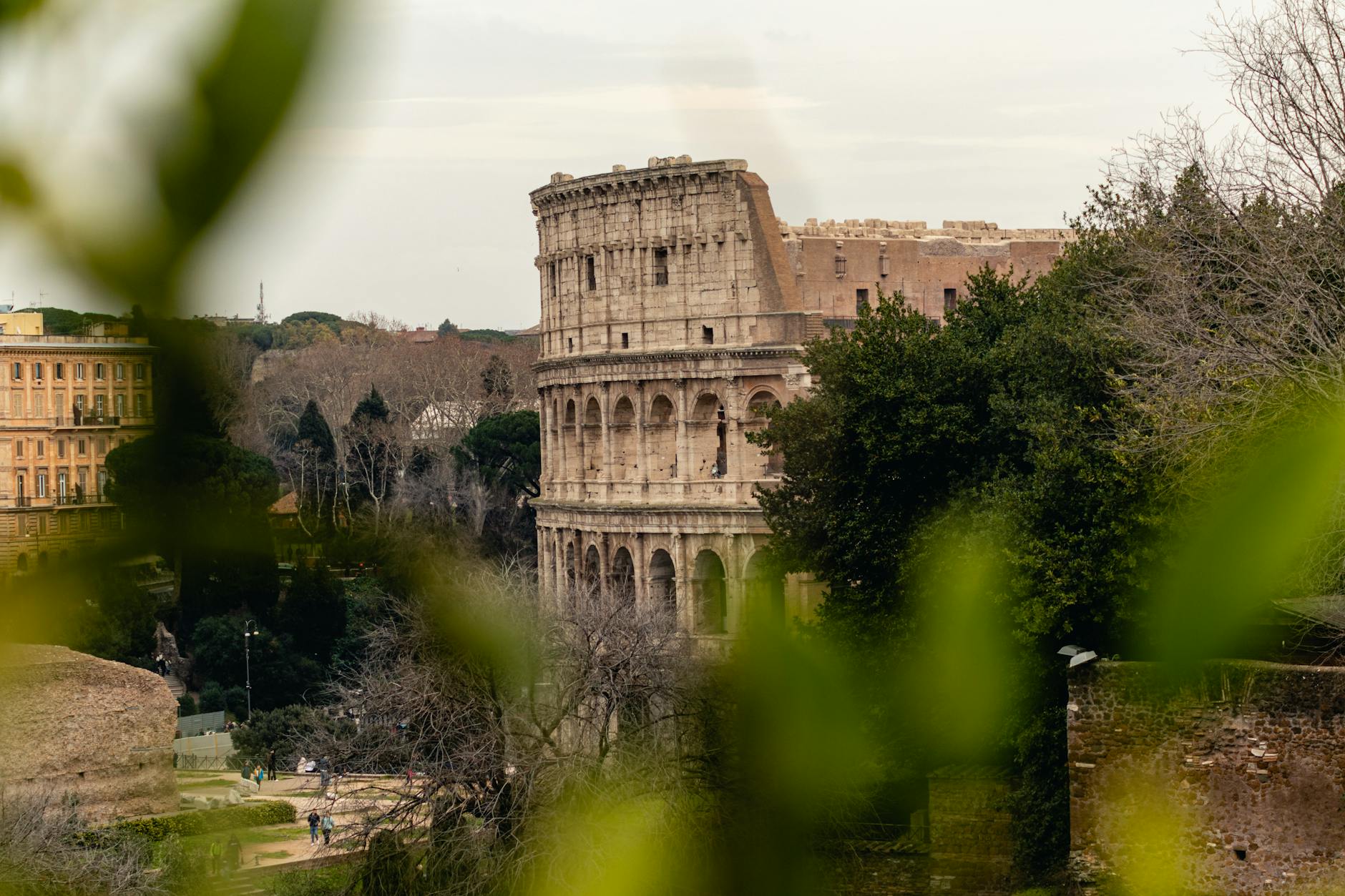
From this enormous basin you get the best perspective on the remains of the imperial palaces of the Palatine Hill, right in front of you. The geography of this valley defined the history of the city. According to myth, it was exactly from these two hills that the twins looked for omens to decide where to found the settlement. If you are curious about this part of ancient history, you can take a look at this brief official historical reconstruction.
The area around the circus is an excellent logistical hub to end the day. If you need to orient your search for accommodation in a quiet but well-connected area, consider that several properties, such as the hotels near the Orange Garden, allow you to reach the Imperial Fora with a fifteen-minute flat walk.
Once the tour is over, check the ATAC website to find the nearest subway station. Alternatively, to locate the most convenient bus stops to get back to your accommodation, check the ATAC website. You saw a good chunk of the city, you ate well, and you did not wear out your feet on the crowded sidewalks of Via del Corso.