
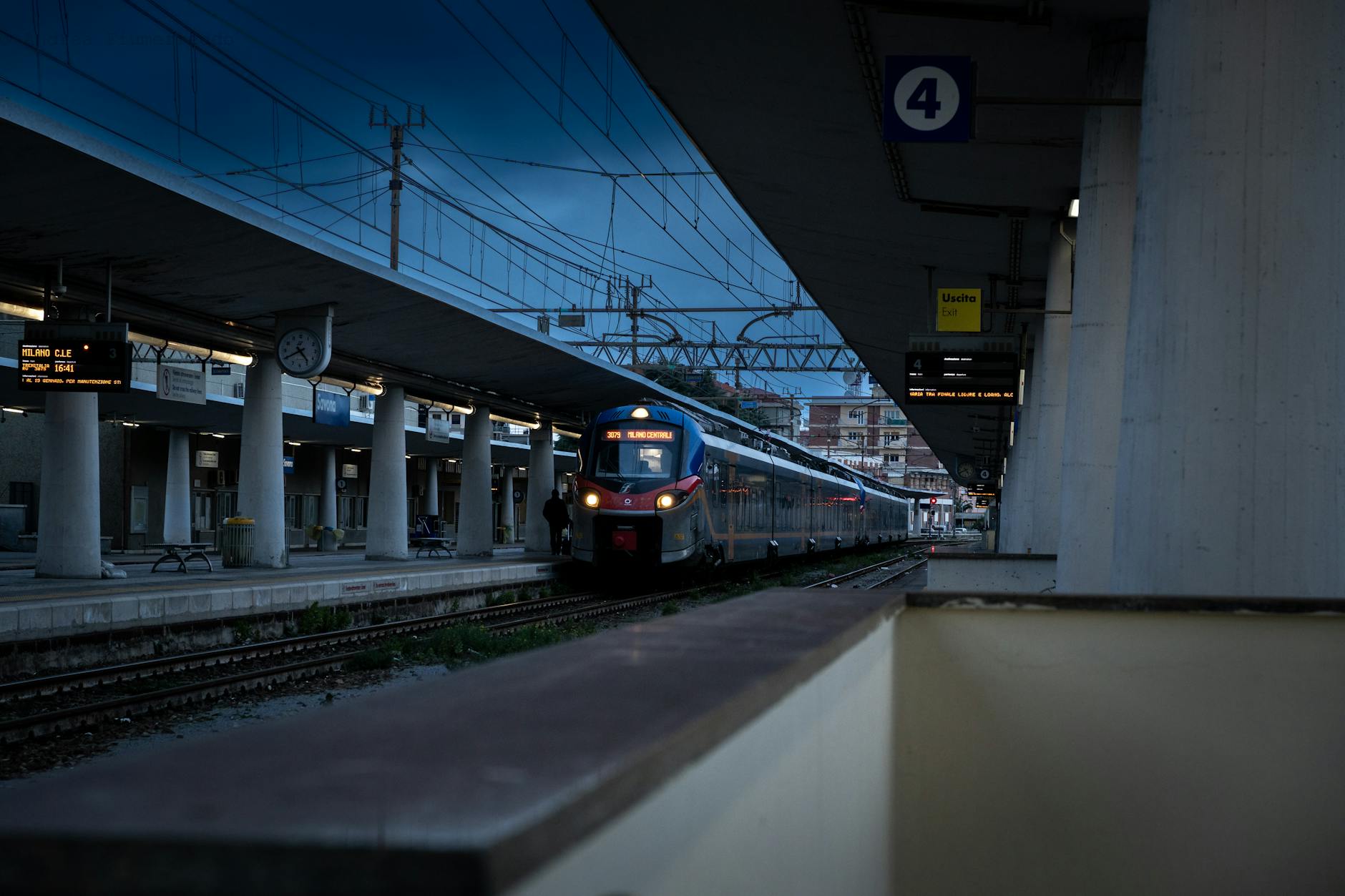
April in Rome has a unique light. You step out of the station or airport and feel that warm air that tells you you have finally arrived. The problem is the exact moment your feet hit the ground. Getting here requires a dose of pragmatism because the city does not exactly welcome you with open arms from a logistical standpoint. Figuring out how to get from the terminals or tracks to the door of your room in the center makes the difference between starting your trip relaxed or arriving already on edge. Do not panic. You just need to know how to get around and what to expect from the various entry points to the capital.
Flying into Rome: Fiumicino, Ciampino, and smaller hubs
Your choice of airport depends on where you are coming from and which airline you use. Fiumicino is the main hub, a massive facility that has improved its services quite a bit in recent years. If you land here, prepare to walk quite a bit between the gates and baggage claim. Once outside, you have two rail options. The Leonardo Express costs 14 euros, takes just over half an hour, and drops you off right at Termini. It is convenient and makes no intermediate stops. But if your accommodation is in Trastevere, Testaccio, or Ostiense, ignore it and take the FL1 regional train. It costs 8 euros and stops exactly at those peripheral stations, saving you an unnecessary trip into the center only to have to head back out.
Ciampino is the realm of European low-cost carriers. It is a small, no-nonsense airport and much closer to the city than Fiumicino. From here, the most logical and proven solution is the shuttle buses parked just outside arrivals, which take you directly to Termini. They take about forty-five minutes, provided the traffic on the Via Appia cooperates.
There is also a third airport for logistics sticklers or those with significantly different budgets. Those traveling on private flights or tourist helicopters land on the Via Salaria, as indicated in the general documents about the city. The Urbe Airport is located just six kilometers from the historic center, but unless you have chartered a small private aircraft, you are unlikely to pass through there.
Surviving Termini and understanding tickets
Those arriving by high-speed train almost always end up at Roma Termini. The station is a chaotic and perpetually crowded microcosm. As soon as you get off the train, you will face a wall of people, clothing stores, cafes, and bright display boards. Head straight for the main exit onto Piazza dei Cinquecento if you need a bus or need to head down into the subway.
For public transport, you will need a valid ticket. The red Atac machines are scattered everywhere in the underground, but there is often a line and sometimes they do not accept worn-out banknotes. You can pay directly at the metro turnstiles by tapping your credit card or debit card. If you prefer paper tickets, a summary of the formats available for travel will help you choose between the single 100-minute ticket or weekly passes, which can be bought without stress at the newsstands inside the station's shopping gallery. Honestly, tap-and-go with your bank card saves you a lot of wasted time, especially if you have luggage in tow.
The Tiburtina alternative for bus travelers
If you arrive by long-distance coach, such as Flixbus or Itabus, your terminal is the Roma Tiburtina bus station. The area dedicated to buses is located in the east square, physically separated from the main entrance of the actual train station.
Tiburtina is architecturally more modern and definitely less chaotic than Termini, but the pedestrian paths are long. From the bus stop, you have to walk about ten minutes on a covered walkway, take the escalators, and cross the large bridge gallery suspended over the tracks to reach the Linea B subway platforms. From there, the Colosseum or Circo Massimo are less than a fifteen-minute ride away. I prefer getting off here when traveling by train from the north because you avoid the bottleneck of the Termini head tracks, but for those arriving by bus, I suggest mentally preparing to walk a bit with your bags before seeing the first useful public transport.
The taxi issue and fixed fares
Taking a taxi from the airports to the historic center has specific rules that you should know before getting on board. Official taxis are exclusively white, have a light on the roof, and the license number clearly visible on the front doors and the back.
There is a guaranteed fixed fare for trips from the airports to any address located within the Aurelian Walls. You do not need to watch the meter, as the price is set by law. To avoid arguments at the end of the ride, you can check the updated amounts by consulting the information on the official tourism portal. Note one detail: taxis from the Municipality of Rome have a slightly different fixed fare than those from the Municipality of Fiumicino, even though they operate at the same airport.
Ignore anyone who approaches you inside the terminal asking in a low voice if you need a taxi. They are unlicensed. Exit through the sliding doors and get in line at the dedicated stands. The queue sometimes looks daunting, especially in April when visitors start arriving in droves for the spring, but it is usually handled with a certain regularity by the airport traffic staff.
Night trains for those with time
There is a way to get to Rome that few still consider in the age of high-speed rail: the Intercity Notte. They leave late in the evening from Milan, Turin, or the southern regions and travel peacefully while you sleep. They cost significantly less than fast trains and save you a hotel night, optimizing your time.
Sleeper cars are not luxurious. They have a slightly dated feel, the spaces are tight, and the morning coffee unmistakably tastes like it came from a vending machine. Yet, waking up as the train skirts the Lazio countryside at seven in the morning, with the low sun cutting across the green fields, has its own logistical and visual appeal. Just watch out for one thing: night trains are often routed to the east tracks of Termini or the side yards, which means having to walk for almost half a kilometer along the platform before reaching the station exit. Get off refreshed, tackle the walk, drop your bags at your accommodation, and you are immediately ready to head out and find an open cafe for a real breakfast.