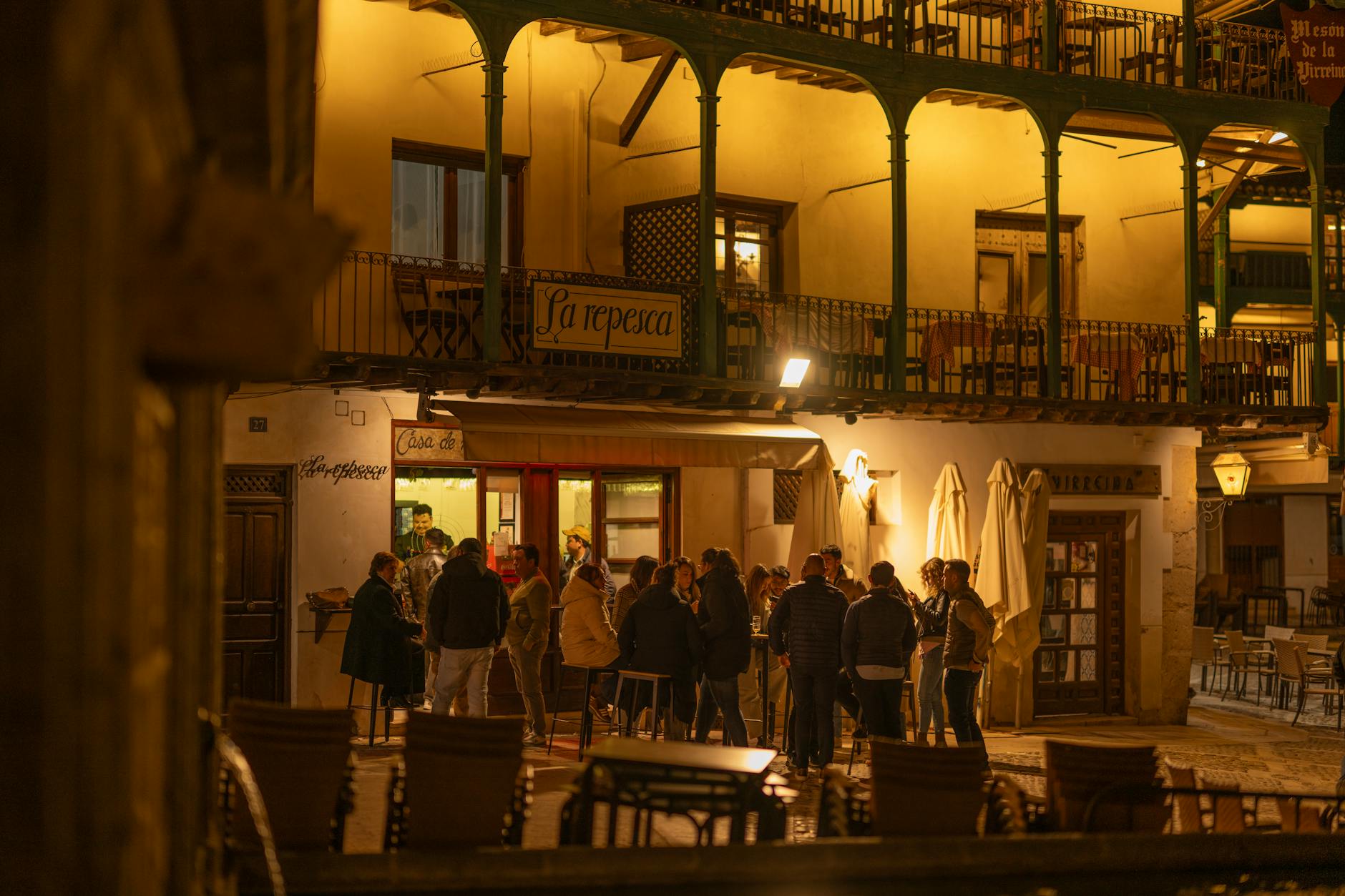
The air in Rome changes in April. It is still light out around seven in the evening, the temperature lets you sit outside without freezing, and sidewalk tables start filling up. Going out at night works differently here compared to other European capitals. If you are looking for massive three-story clubs open from the afternoon, you are in the wrong place. The Roman night is fragmented. It happens on the street, outside wine bars, often standing with a glass in hand. Dinner rarely ends before eleven, and only after that hour do places really start to get crowded.
The Monti neighborhood for an early start
The Monti neighborhood is the most logical choice if you are staying in the center and want to start the evening without calling a taxi. You are physically a stone's throw from Via Cavour and Termini Station, but the atmosphere feels like a small village. The dynamic here is simple. You grab a drink at one of the many spots on Via Panisperna or Via dell'Angeletto and sit on the fountain steps in Piazza della Madonna dei Monti.
There are excellent wine bars serving natural wines and small cafes with tiny tables. Prices are slightly above the city average, but you pay for the convenience of walking there from the Imperial Fora. If you want an idea of how to fit this area into a broader sightseeing tour, you can check a practical itinerary on the official tourism portal. Monti has one practical flaw: it shuts down early. At midnight, many places roll down their shutters or stop serving drinks outside to respect the residents' sleep. At that point, you have to move on.
Surviving the crowds in Trastevere
We reach the critical point. Trastevere at night is a wall of people. In April, with the first mild weekends, crossing Piazza Trilussa requires a good deal of patience. Many tourists go there to eat and stay to drink, but you have to choose your street carefully to avoid ending up in tourist traps.
Avoid the pubs on the main streets, the ones with promoters offering free shots. Head toward Piazza di San Cosimato or look for the dark alleys behind Piazza Santa Maria in Trastevere. There you can still find a few historic holes in the wall to drink a craft beer or a glass of Frascati without having to elbow your way through. Pickpockets are very active in the neighborhood's most crowded streets, especially on Friday and Saturday nights. Keep your wallet and phone in your front pockets and do not leave bags unattended on chairs.
Cocktail bars and speakeasies in the historic center
If you are over thirty and prefer sitting down for a well-made drink, the historic center around Piazza Navona and Campo de' Fiori hides several high-end cocktail bars. In recent years, Rome has seen a boom in the speakeasy trend, with hidden prohibition-style venues.
Getting in often requires a password or a membership card, and reservations are almost always mandatory. Drinks cost between fifteen and twenty euros. It is a high expense, but it guarantees you a seat, air conditioning, and a level of service that does not exist in pubs. These places are often located behind anonymous doors with no signs. If you want to know what events or special openings are happening in the city during your stay, you should check the events section of the local news, which is much more up to date than printed guides.
The university alternative in San Lorenzo
If you are looking for a decidedly rougher environment and dirt-cheap beers, the destination is San Lorenzo. It is the neighborhood that stretches behind La Sapienza University. The walls are covered in graffiti, street lighting is poor, and the bars are spartan. You will not find waiters in vests or crystal glasses here.
Life centers around Piazza dell'Immacolata and along Via dei Volsci. Hundreds of students gather to drink beer bought in minimarkets or historic local dive bars. There are also small venues with live music and social centers organizing low-cost concerts. It is a loud, dirty, and chaotic area, but extremely alive. Pay attention to bans on selling takeaway alcohol in glass bottles, which often kick in during late spring. You can check active ordinances on the security updates of the Municipality of Rome. From San Lorenzo, you need a taxi to get back to the historic center late at night.
Testaccio and Ostiense to stay out until 3 AM
At a certain point, the central neighborhoods close down. If you want to stay out really late and dance, the main route is Testaccio and Ostiense. In Testaccio, the street running alongside Monte dei Cocci is a continuous row of bars and small nightclubs. The clubs are literally carved into the hill of ancient Roman amphora fragments. Music quality varies from door to door, but it is the densest area for options if you want to walk from one club to another.
Ostiense is more spread out in terms of urban layout. It houses the city's largest clubs, built inside former industrial spaces and warehouses. Via Libetta is the reference point for anyone looking for electronic or hip hop music nights. Moving around these areas at night requires organization. Night public transport exists, but waits at the stops can be endless. Make sure you have the taxi app set up on your phone before going out.
Rooftops and the spring evening air
A final note on terraces. Almost all hotel rooftops in the historic center reopen in April. Drinking a gin and tonic while looking closely at the rooftops makes sense, even if the final bill will remind you that you are paying rent for the view. If you decide to go, book for sunset. In spring, the sky in Rome takes on a very sharp orange color, and seeing it from a terrace near the Pantheon justifies the drink surcharge.
Bring a light jacket. The wind in Rome often picks up as soon as the sun goes down, and the evening humidity is felt much more on the rooftops than in the alleys. Once you finish your drink, you can head down to the street and look for a trattoria for dinner.