There is a common trend among people planning a trip to this city. You book tickets for the Roman Forum, calculate the time needed for the Vatican Museums, add a walk through the center and consider the itinerary complete. Contemporary art almost always ends up at the bottom of the priority list. Yet Rome has a very solid modern and urban art scene that runs parallel to the ancient ruins and baroque churches. In April the temperatures are great for spending several hours outdoors. This is a key detail if you want to explore the outer neighborhoods hunting for murals or if you are looking for an alternative to the crowded central routes. Stepping off the classic paths allows you to see a different city, one experienced by locals, where the pace is less dictated by tourist crowds.
The major exhibition spaces
If it rains, if it gets cold or if you simply prefer indoor and structured spaces, there are five main hubs dedicated to modern and contemporary art. They have very different identities, costs and underlying concepts.
- MAXXI: It is located in the quiet Flaminio neighborhood. You can easily get there on tram 2. The final stop is at Piazzale Flaminio, right outside Piazza del Popolo. The building, designed by architect Zaha Hadid, is worth the trip alone. The interior spaces are massive, made of curved ramps, suspended stairs and exposed concrete. The temporary exhibitions can be complex or highly specialized, but the structure itself never disappoints. For updated ticket prices, check the museum's official website. There is a large outdoor plaza where in spring it is pleasant to stop for a coffee in the sun before heading back toward the center.
- MACRO: The main venue is on Via Nizza, in the Salario district. You can plan your route using public transport by checking the ATAC website. For information on admission costs, check the facility's official website. This space lacks a traditional permanent collection. It acts as a large container for temporary installations, independent publishing and artistic performances. Sometimes you find it full of interesting works, other times it feels a bit scattered. Since it is free, it makes sense to go in, take a look around and then head up to the rooftop terrace, a very quiet spot to rest your legs.
- Mattatoio: This is in Testaccio, easily reachable by public transport by checking the ATAC website. The old industrial pavilions where meat was once slaughtered now host photography exhibitions, contemporary art and performances. The industrial architecture of the site, with iron tracks still hanging from the ceilings and old cold storage rooms, creates a sharp contrast with the artworks on display. It is a raw space, perfect for a weekend afternoon, to be paired with lunch in one of the Testaccio trattorias.
- Galleria Nazionale d'Arte Moderna e Contemporanea (GNAM): In Valle Giulia, a stone's throw from Villa Borghese. It is easily reached by tram 3 or 19. Here you will find works from the Italian and international twentieth century, from Balla to Fontana, up to Pollock. The building has a classic and monumental look. The interior layout, however, has been completely rearranged in recent years. Today it no longer follows a chronological order, but offers visual pairings between different eras. The grand outdoor staircase is always full of university students. To check updated hours and current exhibitions, you can consult the dedicated section on the official Rome tourism portal.
- Palazzo delle Esposizioni: It is located right in the center, on Via Nazionale. It is the largest interdisciplinary exhibition space in the city. It does not have its own collection, but it hosts top-level temporary exhibitions, often dedicated to major international photographers or specific artistic movements. The building is massive and the rooms are huge. If you are staying in the Termini or Monti area, you can walk there in a few minutes.
The murals between Ostiense and San Paolo
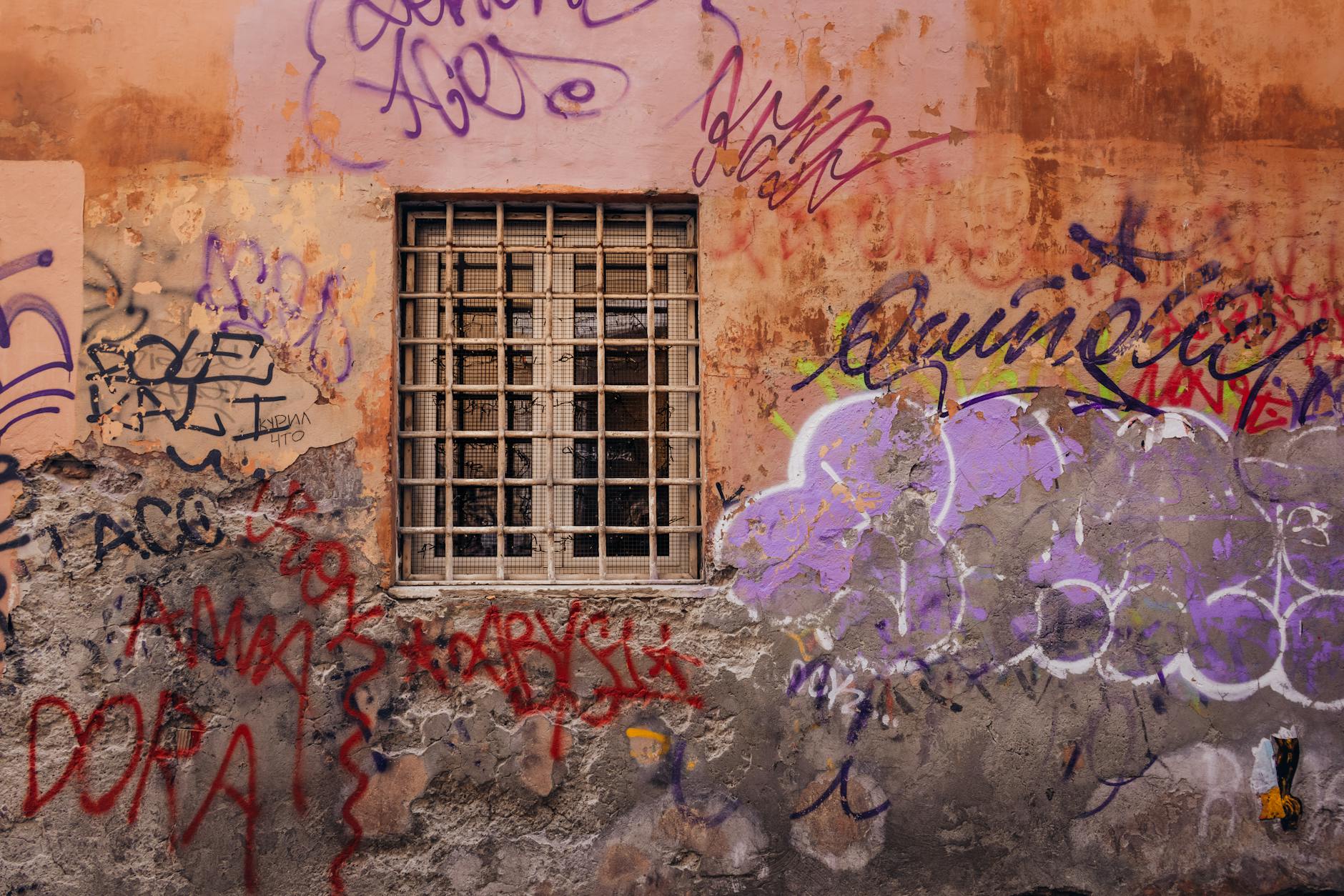
If you prefer walking and the April weather allows it, the southern part of the city offers miles of street art. Ostiense is a former industrial neighborhood that has changed its face over the last fifteen years, converting old warehouses into bars and offices. Reach the area by checking the routes on the ATAC website and head toward Via del Porto Fluviale. Here residential buildings and former depots have become concrete canvases for international artists.
At the main intersection you will find the former air force barracks with facades painted by Blu, a massive work covering the entire perimeter of the building with colorful faces that seem to watch the traffic. A little further on, on an adjacent building, are the black and white works of Roa. The murals continue scattered all along Via Ostiense and reach as far as the Basilica of San Paolo. The City often organizes walking tours to promote these works and share the industrial history of the area, as seen in the initiatives promoted for ecological Sundays.
The best time to do this tour is in the morning, around nine or ten. The traffic on Via Ostiense is not yet suffocating and the morning light perfectly hits the old industrial buildings and the large metal skeleton of the Gazometro, visible from almost every intersection. After the walk, you can stop at one of the many bakeries on Via del Porto Fluviale to grab a slice of pizza bianca.
The urban projects of Quadraro and Tor Marancia
If you move away from the more central areas, there are two neighborhoods where urban art has entered directly into the courtyards of public housing, changing the look of entire city blocks.
The first is Quadraro. To get to Quadraro, you can plan your route on the ATAC website. This is where the M.U.Ro project was born, an urban art museum that winds through the streets of a neighborhood with a strong local identity and a deeply rooted partisan history. You will not find perfect cobblestones or souvenir shops. There are local markets, historic workshops and dozens of works painted on the blind walls of the buildings. Quadraro is easy to explore on foot in a couple of hours. You can wander aimlessly through the narrow streets around Via dei Lentuli and Piazza dei Tribuni.
The other area to mark on the map is Tor Marancia. From the center you can reach Viale Tor Marancia by checking the lines on the ATAC website. The Big City Life project transformed an entire complex of 1950s public housing into an open-air art gallery. Twenty-two artists from all over the world painted the facades of the buildings, creating works fifteen meters high. You step into the courtyard of the housing blocks and find yourself surrounded by color. It is a real residential space, with laundry hanging out, open windows and people chatting on benches. You enter quietly, look around, take a couple of photos and respect the peace of the people living there, avoiding loud noises.
Foundations and private galleries in the center
If you are short on time and do not want to stray too far from the historic districts, there are solid alternatives wedged between the ancient buildings.
A stone's throw from the Circus Maximus and the Mouth of Truth, on Via del Velabro, is the Rhinoceros building, managed by the Alda Fendi Foundation. Admission is free. It hosts temporary exhibitions and installations, but the real reason to go inside is the architectural restoration of the interiors designed by Jean Nouvel. The peeling walls and old floors have been left intact and paired with blocks of steel, glass and mirrors. Take the elevator, go up to the top floor and enjoy the terrace overlooking the Palatine Hill, an unusual and very quiet perspective.
If you are near Via Veneto, you can look for the Roman branch of the Gagosian gallery on Via Francesco Crispi. For details on prices, check the gallery's official website. The exhibition spaces were carved out of a former bank building. The size of the rooms, with very high ceilings, allows them to display monumental works by top-tier global artists. The exhibitions change regularly, so it is worth checking their website before dropping by.
In Trastevere there is an alternative if you avoid the squares overrun by restaurant tables. Look for Via delle Mantellate. It is a dead-end street right behind the Regina Coeli prison, quiet, narrow and rarely visited by tourists. There, seemingly anonymous doors hide small independent exhibition spaces and contemporary artist studios. There are no neon signs pointing the way, you just have to walk slowly and peek inside the open courtyards.
The best way to manage these stops is to divide them according to the weather. Use the April mornings for outdoor walks in Ostiense or Tor Marancia, when the air is cool and the light is crisp. Leave the large indoor spaces like MAXXI, GNAM or the private galleries for the afternoon.