Rome gets tiring. After three days spent dodging tour groups with little flags between the Imperial Forums and the Vatican, you need a break. April is the ideal month to get out of the city. It is warm but you do not sweat just standing there, and the days are long enough that you do not have to constantly check your watch. Instead of renting a car and getting stuck in traffic on the Ring Road to reach complicated places, use the regional trains. They are cheap, depart frequently and take you to places that are genuinely worth the half-day trip. Here are five options that work well.
How to handle regional trains
Before picking a destination, let us figure out how to get there. For all the spots listed below, check the connections on the Trenitalia website. Regional train tickets have a fixed price based on distance. There is no need to buy them months in advance hoping to save money. To buy tickets, check the procedures on the Trenitalia website.
Check the ticket validation rules on the Trenitalia website. For digital ticket rules, consult the Trenitalia website. Regional trains do not have assigned seats. You just get on and sit wherever you find space. To check for any local transport strikes before you leave, take a look at the notices on the Turismo Roma portal.
Ostia Antica: Roman ruins in the shade of pine trees
Many tourists plan a trip all the way down to Pompeii. It is an exhausting trek that eats up twelve hours of your day, six of which are spent on high-speed trains and buses. Ostia Antica is half an hour from the center of Rome and offers a massive archaeological area that is green and shaded by umbrella pines. It was the port city of ancient Rome. In April the lawns between the ruins are full of daisies and you can walk for hours on the original paving stones of the Decumanus Maximus without the Colosseum crowds. You can walk into the old taverns, see the intact public baths and sit on the steps of the Roman theater.
- How to get there: For updated connections to the coast, check the ATAC website. Verify the correct stop on the ATAC website.
- Practical advice: The area is huge. Bring water and something to eat. You can have a picnic on the grass. There is a cafe inside, but prices are high and vending machines are scarce.
- Tickets: You can buy your ticket right at the entrance. For opening hours and discounts, check the information pages on CoopCulture.
Tivoli: imperial villas and fountains
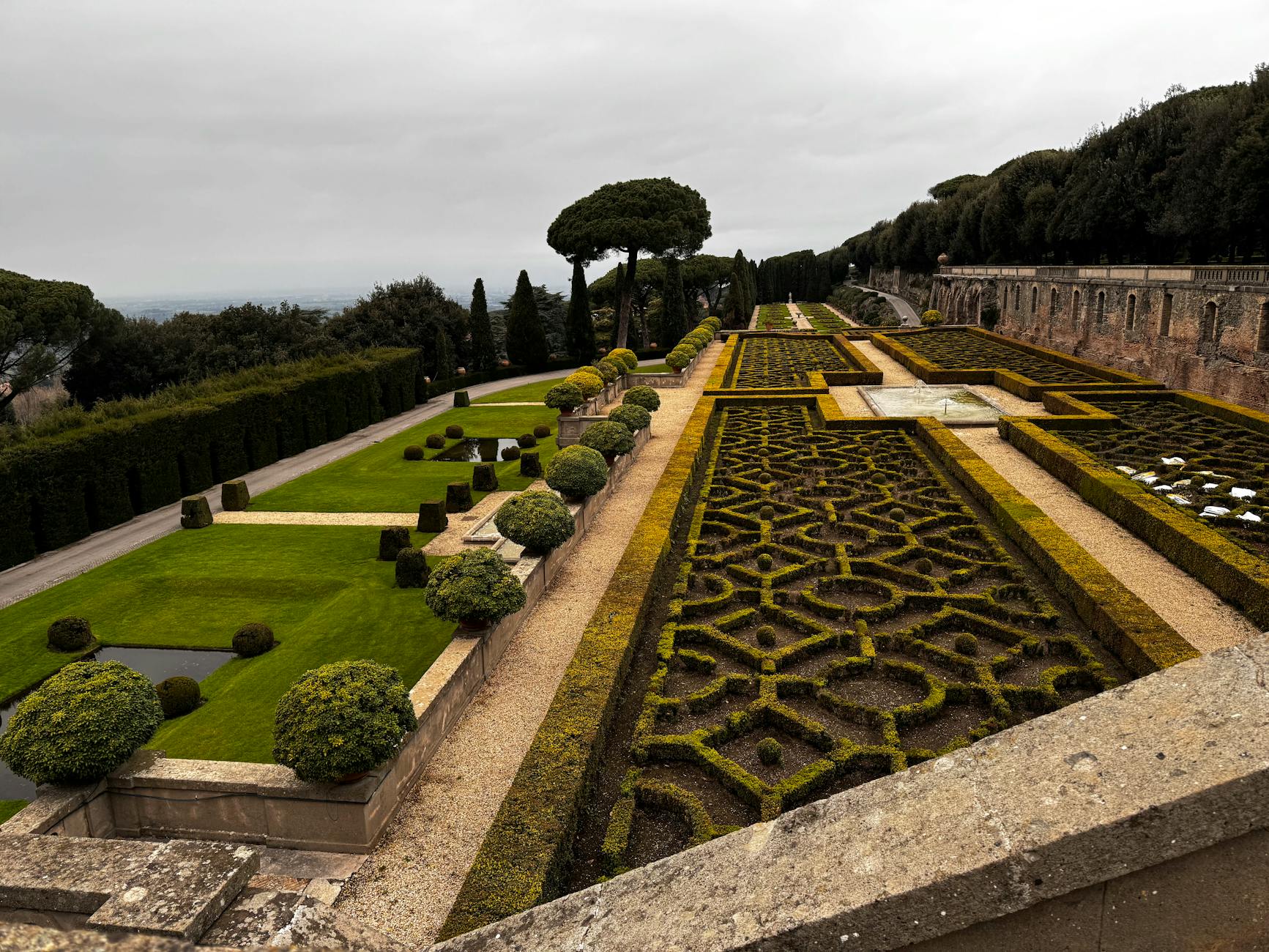
Tivoli is located east of Rome in the Tiburtini mountains. It requires a bit of planning because the two main villas are far apart. Villa d'Este is right in the center, famous for its terraced gardens, cypress trees dozens of meters high and hundreds of fountains fed by the Aniene river. Villa Adriana is the country residence of Emperor Hadrian. It is flat, very expansive and located down in the valley. Pick one if you want to take things slow. If you want to see both in one day, check the local connections on the municipality's official website. In April the gardens of Villa d'Este are at their best, with the water cooling down the afternoon air.
- How to get there: Check the departure and arrival stations on the Trenitalia website. Travel times are available on the Trenitalia website. From the station to Villa d'Este is a ten-minute walk.
- The nature alternative: If palaces bore you, go to Villa Gregoriana, a wooded park with steep trails that go down into a gorge to a large waterfall.
- Where to eat: Avoid the cafes with tourist menus right in front of the Villa d'Este entrance. Walk away towards Piazza Plebiscito to find trattorias frequented by the locals.
Frascati and the Castelli Romani: porchetta and white wine
Romans go there for Sunday lunch to escape the traffic. The Castelli Romani are a group of towns located on the Alban Hills. You need a car to tour all of them, but Frascati is the easiest destination to reach by train for a half day dedicated to food. You go there to eat in the fraschette, old wine cellars turned into casual taverns. You sit on wooden benches, order a jug of local house white wine and eat porchetta, dried pork strips, olives and pecorino cheese.
- How to get there: Check the departure station on the Trenitalia website. For travel times and the arrival station, consult the Trenitalia website.
- When to go: Avoid Mondays, which is the closing day for many places. Saturday at lunch or late afternoon on a weekday are the best times to find a seat without the Sunday chaos.
- What to expect: Heavy, salty and flavorful food. Paper tablecloths and rushed service. Do not look for fine dining around here. You come here for the substance and the low bill.
Bracciano: the castle and the volcanic lake
A volcanic lake surrounded by woods and dominated by a large fifteenth-century castle. The Orsini-Odescalchi Castle is extremely well kept. You can visit its rooms furnished with period pieces, the centuries-old kitchens and walk along the patrol walkways to look at the lake from above. After the visit, head down to the shores. In April the water is definitely too cold for a swim, but the lakeside restaurants put their tables outside for a sunny lunch based on lake fish.
- How to get there: Check the lines and departure stations on the Trenitalia website. The trip takes about an hour.
- The effort: The train station is in the town, in the upper part. To get down to the lake there is a steep descent of a couple of kilometers. On the way back it becomes a tiring climb. Wear comfortable shoes or look for the local shuttle bus.
- Tickets: The castle is privately managed. You buy your ticket directly at the ticket office under the walls.
Tarquinia: the painted Etruscan tombs
This is the furthest trip on the list, but if you are interested in ancient history it makes sense to do it. The tombs of the Monterozzi Necropolis are underground rooms carved into the rock, decorated with colorful frescoes from two thousand five hundred years ago. They show scenes of daily life, banquets, dancers, musicians and hunting scenes. The medieval town of Tarquinia is quiet and deserves a walk for its towers and the view over the hills rolling down to the sea.
- How to get there: Check the departure and arrival stations on the Trenitalia website. Travel times are available on the Trenitalia website. Note: the station is on the plain, the town is on the hill. You have to take the local bus waiting in the station square to go up to the center.
- What to see: Besides the necropolis, go to Palazzo Vitelleschi which houses the National Archaeological Museum. Inside are the Winged Horses, a large terracotta sculpture from the 4th century BC that justifies the trip.
- Practical advice: You look at the tombs from above through glass doors, placed there to protect the frescoes from humidity. You go down a flight of narrow steps, press the button to turn on the timed light and look inside. Anyone who suffers from claustrophobia or has knee problems should think carefully before going down.